
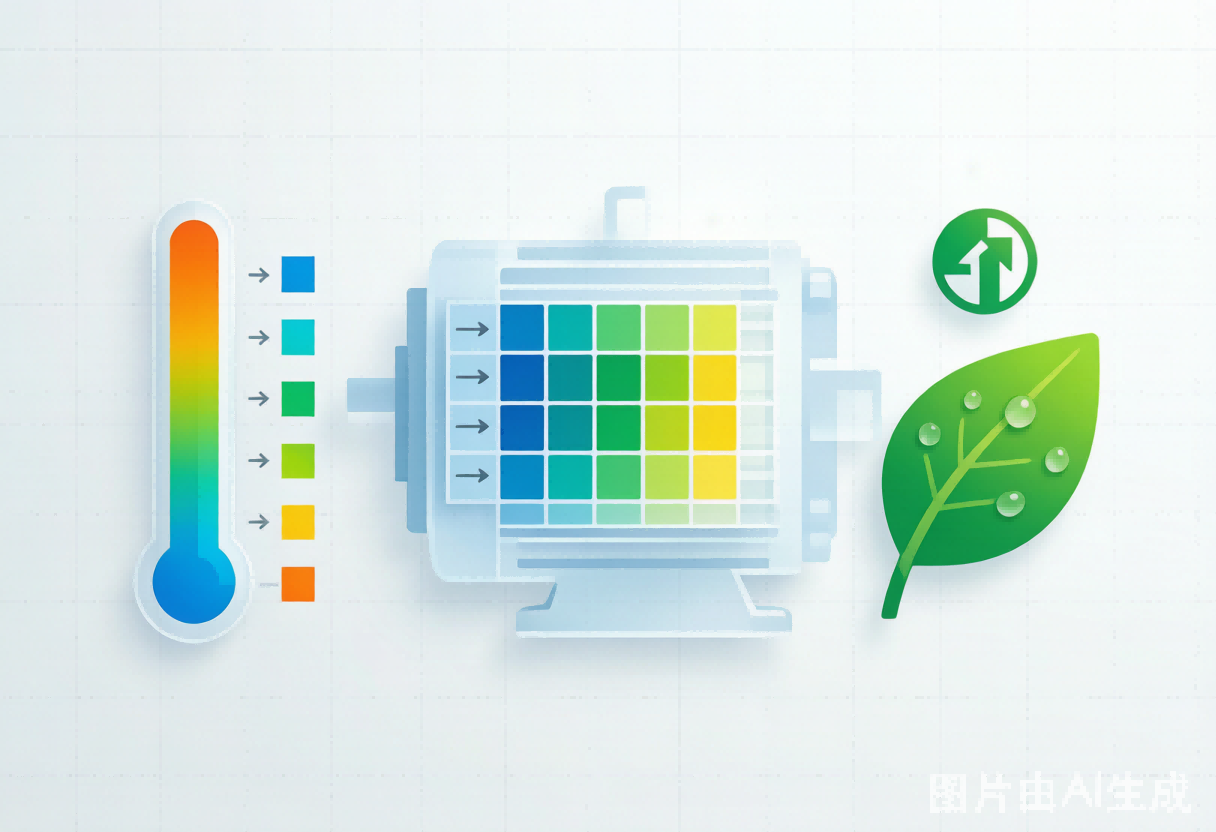
Incorrect selection of insulating varnish is a leading cause of premature motor failure. Based on standards such as GB/T 11021 and IEC 60085, this article systematically outlines the three core criteria for selecting motor insulating varnish: thermal resistance, adhesion, and environmental compliance. It also provides a selection comparison chart and a guide to common pitfalls across different operating conditions. Designed for procurement and R&D professionals in home appliances, new energy vehicles, and industrial motors, this resource helps ensure precise material selection and mitigate quality risks.
I. Why Do Insulating Varnish Selections Keep Failing?
Why did a turn-to-turn short circuit occur in the motor after six months of operation, even though I purchased insulation varnish according to the manufacturer's recommended model?
Switched to water-based paint and passed environmental standards, but failed the heat resistance test. What's going on?
在电机生产中,绝缘漆选型错误是导致早期失效的主要原因之一。很多采购只看价格,工程师只盯参数,却忽略了『工况匹配』这一核心逻辑。
As Guangzhou Feisi's technical team, we've distilled three key selection criteria—temperature resistance, adhesion strength, and environmental compliance—to help you build a scientific selection framework.
II. Criterion 1: Heat Resistance – The Lifeline of Insulating Varnish
Understand Thermal Classifications (GB/T 11021 / IEC 60085)
The thermal class of the varnish directly determines motor lifespan. Common classifications are listed below:
Y Class (≤90°C): Largely phased out; used only for micro-motors with minimal requirements.
Class A (105°C): Common grade for traditional phenolic enamels
E级(120℃)��小型通用电机最低要求
Class B (130°C): Commonly used in home appliance motors; cost-effective.
F Class (155°C): Recommended rating for industrial inverter motors and servo motors
H Class (up to 180°C): Mandatory grade for new energy vehicle motors and compressor motors
Class C (> 180°C): For extreme high-temperature applications, such as aerospace motors
(Note: The temperature value represents the maximum continuous operating temperature permitted for the insulating material, not the short-term peak thermal tolerance.)
Pitfalls to Avoid in Selection
Mistake 1: Focusing only on temperature rating, not thermal aging life
The paint is rated for 180°C, but after 1000 hours of operation at 180°C, its bond strength dropped by 50%, making it effectively Class F.误区二:忽略热点温度
电机绕组内部温度通常比表面高10~20℃,选型时需预留余量。仅按铭牌温升等级选漆是不够的,必须考虑绕组热点。
Guangzhou Feisi Suggestion
Appliances/General Motors: Select at least Class B (130°C)
Industrial Inverter Motor / Servo: F Class (155°C) recommended
New Energy Vehicle Motors/Compressors: Must be H-class (180°C) or higher
3. Standard 2: Adhesion – The Backbone of Insulating Varnish
Why is adhesion so critical?
Insulating varnish must not only insulate but also adhere strongly. Poor adhesion triggers a chain of failures:
Loose coil → Increased vibration noise → Enameled wire abrasion → Turn-to-turn breakdown
Thermal expansion and contraction → Paint film cracking → Moisture intrusion → Decreased insulation resistance
Long-term operation → Paint film peeling → Winding loosening → Motor failure
附着力测试方法对比
划格法(GB/T 9286):用百格刀在漆膜上划出网格,胶带粘贴后目视评级。≤1级为优秀(划格边缘光滑,无剥落),适用于各种基材表面,是电机行业最常用的快速评测方法。
Pull-off method (GB/T 5210): A tensile tester is used to detach a glued metal stud from the paint film, quantifying adhesion strength in MPa. While highly accurate, sample preparation is labor-intensive; this method is typically employed for type testing during new product development.
Bend Test: Bend the coated copper or aluminum sheet around a mandrel with a diameter of 180°, then inspect the coating for cracks. Simple, intuitive, and ideal for rapid on-site assessment.
Pitfalls to Avoid in Selection
Misconception: Higher viscosity means better adhesion.
事实:粘度仅影响浸渍时的渗透性和施工性,附着力取决于树脂分子与金属基材(硅钢片、铜线)之间的化学键合强度。有些低粘度漆反而因渗透更充分而结合更好。
Guangzhou Feisi Suggestion
Silicon steel sheets and copper wires must be clean and dry (moisture content < 0.1%); oil and rust are the primary enemies of adhesion.
水性环氧体系附着力普遍优于传统油性漆(因环氧分子链含羟基、环氧基等活性官能团,可与金属表面形成化学键)
四、标准三:环保合规——绝缘漆的通行证
全球环保法规速览
China: GB 30981-2020 "Limits of Harmful Substances in Industrial Protective Coatings" — Waterborne coatings VOC limit ≤100g/L, Solvent-based coatings ≤420g/L
欧盟:RoHS 2.0(2011/65/EU)限制铅、汞、镉等6类有害物质;REACH法规管控高关注物质(SVHC)
North America: EPA NESHAP imposes strict total plant emission limits on VOCs from coatings.
Trend: China's "14th Five-Year Plan for Green Industrial Development" explicitly promotes the substitution of low-VOC coatings, with multiple regions listing solvent-based insulating varnishes on their "restricted use" lists.
Water-Based Paint vs. Solvent-Based Paint Comparison
水性环氧绝缘漆:VOC含量≤100g/L(趋近于零),非易燃液体(运输无危险品管制),气味低(改善作业环境),符合RoHS/REACH(出口无障碍)。
Solvent-based insulating varnish: VOC content 300~500 g/L. Flammable liquid (requires explosion-proof storage and transport). Has a pungent odor; export to the EU requires an exemption certificate.
Pitfalls to Avoid in Selection
Myth: Water-based paints are not heat-resistant and have poor adhesion.
Fact: Modern waterborne epoxy/polyurethane technologies have overcome temperature resistance limits (up to H-class 180°C). Adhesion has been significantly enhanced through chemical modification (e.g., adding silane coupling agents), outperforming traditional solvent-based systems across multiple metrics.
Guangzhou Feisi Suggestion
出口欧盟/北美:必须向供应商索取RoHS、REACH符合性声明及第三方检测报告
国内环评严格地区:优先选择水性漆,降低环保风险和废气处理设施投资
五、场景匹配:不同电机的选型速查表
Washing machine motor: Grade B (130°C), compatible with both water-based and solvent-based coatings; prioritize moisture resistance.
空调/风扇电机:B-F级(130-155℃),水性/溶剂型均可,重点关注降噪要求
Range hood motor: F class (155°C); oil-resistant epoxy system recommended, with emphasis on stain resistance.
Electric Vehicle Drive Motor: Class H (180°C). Waterborne epoxy systems are recommended. Focus on heat resistance and thermal shock resistance.
汽油发电机:F级(155℃),推荐水性环氧体系(附着力好),重点关注抗震动性
Refrigerator/Air Conditioner Compressors: F-H class (155-180°C); must have high dielectric strength, with emphasis on high-voltage resistance and refrigerant corrosion resistance.
High-Frequency Transformer: Class H (180°C). Recommended to use a low dielectric loss system, with a focus on electrical stability under high-frequency conditions.
Power Tools (Universal Motors): Class F (155°C). Recommended anti-tracking compound; prioritize spark resistance.
Industrial Variable Frequency Drive (VFD) Motor: Class H (180°C), must use corona-resistant formulation, with emphasis on pulse voltage surge resistance.
Servo motor: Class F-H (155-180°C); waterborne epoxy system recommended; prioritize reliability of precision control.
Selection should be based on a comprehensive assessment of actual operating conditions, impregnation processes, and equipment capabilities.
VI. Five-Step Selection Guide for Guangzhou Feisi
Step 1: Define operating conditions
Specify the motor's actual operating temperature range, ambient humidity, vibration level, and whether it is exposed to chemical media (oil, grease, refrigerants, etc.).
Step 2: Determine the level
Select the appropriate insulation class (B/F/H) based on winding hotspot temperature plus a 20°C margin to ensure long-term lifespan and reliability margin.
Step 3: Match Processes
确认浸渍方式——沉浸(通用)、真空浸渍(高填充要求)、滴浸(流水线高效率)——不同工艺对漆的粘度、凝胶时间要求不同,需匹配对应产品型号。
Step 4: Verify Performance
After small-batch pilot production, conduct the full suite of type tests including insulation resistance, power frequency withstand voltage, and thermal aging (GB/T 11026 series). Skipping pilot production to switch directly to mass production is not recommended.
Step 5: Compliance Review
Verify the supplier's RoHS, REACH, and VOC test reports to ensure compliance with environmental regulations in the target market.
七、常见问题解答(FAQ)
Q1:水性绝缘漆能否完全替代溶剂型漆?
A:在绝大多数应用场景下可以。水性环氧漆在绝缘填充、附着力和环保性能上已优于传统油性漆,H级耐温能力也已成熟。主要注意烘烤条件——水性漆需要更长的预热阶段(60-80℃)以排出水分,固化段温度(130-150℃)与油性漆相当。
Q2: How to quickly assess varnish quality?
A:两个简易试验:① 涂覆固化后180°弯曲铜片,漆膜无裂纹为合格;② 沸水煮1小时���观察,无起泡、无脱落为合格。这两项可以快速筛查附着力、柔韧性和湿态绝缘性能。正式评价仍需按照标准方法进行全套型式试验。
Q3:浸水24h后绝缘电阻多少算合格?
By industry standards, industrial-grade performance requires volume resistivity of ≥1×10^10 Ω·cm (normal conditions) and ≥1×10^8 Ω·cm after 24h water immersion. Guangzhou Feisi water-based epoxy paint achieves ≥1×10^14 Ω·cm under normal conditions and maintains ≥1×10^12 Ω·cm even after 24h in water—far exceeding requirements.
Q4:广州飞思能否提供定制化服务?
A: Yes. Key parameters such as temperature rating (B/F/H), viscosity range (to suit various impregnation processes), and cure speed can be adjusted to meet customer requirements. For specialized performance needs (e.g., corona resistance, high thermal conductivity), our technical team will evaluate and provide a customized solution.
关于广州飞思
Guangzhou Feisi Synthesized Materials Co., Ltd. specializes in the R&D and production of high-performance water-based insulation materials. Our product portfolio includes water-based epoxy insulating varnishes, amorphous strip composite adhesives, and water-based phenoxy resins, serving customers across home appliances and motors, new energy vehicles, industrial motors, and high-frequency transformers.
Silicon Steel Self-Adhesive Coating / Waterborne Epoxy Insulating Paint — Choose Guangzhou Feisi Brand
Official hotline: 020-82793066
Water-based Paint Business: Engineer Liu 15920494556
Thiol Business: Engineer Zhang 13609004936
Overseas Helpline: +86 15920494556
For more information on Feis's full range of products in Guangzhou, to request samples, or to schedule a process trial, please contact us by phone or email.